Microteaching sessions – a reflection of my peers’ sessions and Object-Based Learning session with Dayna Tohidi
I realised that I had been using object-based learning (OBL) intuitively in my teaching practice. Observing Dayna Tohidi’s recorded session and seeing my peers apply OBL during microteaching deepened my understanding of the approach and increased my confidence in using it more intentionally in future teaching.
Previously, I designed an OBL session called the Brand Table, where students brought examples of brand packaging and collaboratively grouped them according to brand terminology. While the session was interactive and engaging, I later recognised that it did not fully exploit the potential of OBL. Following a more formal introduction to the approach, I plan to revisit this and other sessions, incorporating best-practice principles to enhance engagement, discussion, emotional reading and peer learning.
Similar to Tohidi, I am particularly interested in creating learning experiences that are inclusive of neurodivergent students. Being neurodivergent myself, I am mindful of designing sessions that accommodate diverse learning styles and non-traditional pathways into higher education. OBL supports this inclusivity by offering multiple ways for students to contribute, including visual observation, personal memory, and contextual speculation.
One of the aspects I had previously overlooked is the emotional reading of objects. Tohidi highlighted that objects connected to lived experience can promote deeper, more candid discussion, with prior knowledge serving as a valuable learning resource. This approach fosters a safe environment for contributions, even when knowledge is incomplete, and encourages peer learning, reflective feedback, and the co-construction of understanding rather than passive transmission of information.
In a Year 1 curriculum crowded with prescribed content that often encourages passive consumption, active and experiential pedagogic practices such as OBL provide a valuable disruption. They represent the first step towards reshaping the curriculum to be more dialogic and participatory. I also aim to reposition the course team’s teaching practices to prioritise discussion, guide reflection, and create space for multiple voices, rather than focusing solely on delivering predetermined conclusions. Bamber and Jones also advocate for learning environments where students are active participants, not just passive recipients by inviting learners to interpret, discuss, and co‑construct meaning.
I was also struck by the additional, often less visible, benefits of OBL, including the development of transferable skills such as teamwork, communication, analytical thinking, careful observation, and visual interpretation. In formal education, measurable or technical competencies are often emphasised, while these softer yet essential skills are marginalised. OBL offers a framework for foregrounding and legitimising their development within the curriculum (Tohidi, 2025, guest lecture).
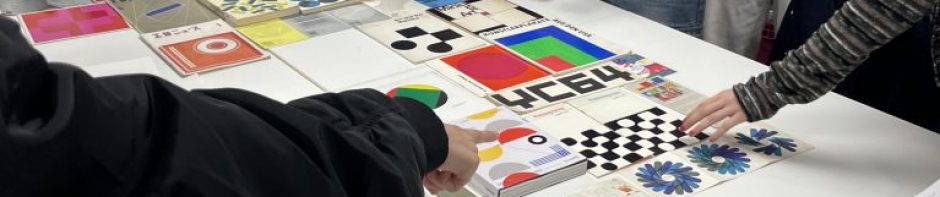
During the microteaching session, my peers fully embraced OBL through the use of mystery objects, digital artefacts, and found ephemera, prompting storytelling and interpretation. Participating in this session inspired several enhancements for my own OBL practice, such as developing audience personas from found objects, integrating digital artefacts as learning tools, and adopting a more visceral, emotionally engaged approach to object reading. Embedding these strategies in future sessions has the potential to normalise uncertainty, partial knowledge, and exploratory thinking as productive and valued aspects of learning.
References
Bamber, V. and Jones, A. (2015) ‘Challenging students: enabling inclusive learning’, in Fry, H., Ketteridge, S. and Marshall, S. (eds.) A Handbook for Teaching and Learning in Higher Education: Enhancing Academic Practice. 4th edn. Abingdon: Routledge, pp. 152–168.
Tohidi, D. (2025) Object-based learning and collaborative pedagogy. Guest lecture, PGCert Academic Practice, University of the Arts London, 28 January.
Microteaching session (2026) University of the Arts London, 4 February 2026.